



PV generation in snowfall
An unexpected result
 Roman Rubanovich
Today after noon, winter arrived in Varna: it suddenly became dark and heavy snowfall began. I decided to check how things were in other regions of Bulgaria and looked at Windy. It turned out that snow was falling across the entire country — this was also confirmed by images from several webcams.
An hour later, the situation had not changed, and I became curious how much energy photovoltaic systems in Bulgaria produce in such weather. I know how individual systems behave under similar conditions, as I regularly monitor their operation, but this time I wanted to look at PV generation across the country as a whole.
Visiting the website of the system operator, I expected to see the share of solar generation at the level of 1-2% of the overall mix, so I was extremely surprised by the dispatch data:

At the moment when the entire Bulgaria was covered by wet snow, solar power plants were producing >680 MW — around 12% of total generation in the country, excluding a large number of PV systems for self-consumption that are not included in the statistics. In addition, >80 megawatts were directed to charging battery energy storage systems.
I immediately wrote about it on social media, to which one of the commenters objected:
— Here the sun is shining and there has been no snow since 2017
— Where is that?
— Stara Zagora
Then I took another close look at the screenshot from Windy and noticed that, in fact, it was clear specifically in the Stara Zagora area, meaning that local solar power plants could operate normally:

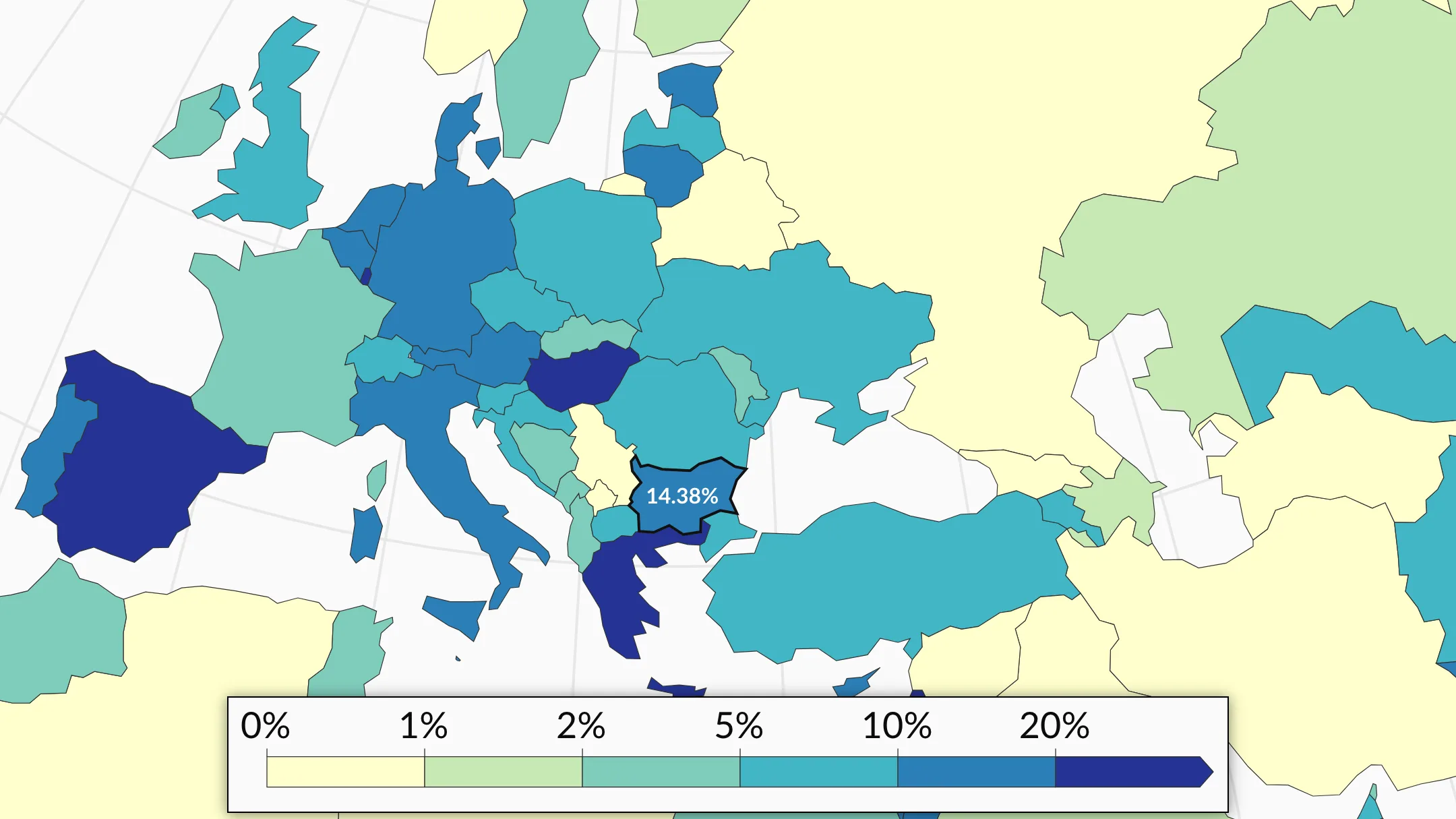
But even in this case, 12% is a lot. At the very least, it exceeded my expectations: just a couple of years ago, this would have been hard to imagine. After all, today is 8 January, the sun is low above the horizon, so its rays pass through a thicker layer of the atmosphere and lose a significant part of their energy. In addition, the tilt of solar panels at utility-scale power plants is far from optimal for January.
Of course, a longer-lasting snowfall would change the situation dramatically. For example, in 2017 there was indeed a lot of snow in Bulgaria. I remember this well because it was that winter that I tested my all-wheel-drive electric bicycle in deep snow:

Nevertheless, the trend toward a growing share of solar generation is obvious, and I have no doubt that in the coming decades photovoltaics will become the main source of electrical energy for humanity. And in just the next few years, we are in for a major and very interesting transformation of the energy sector.